Chinese carmakers are no longer content to ship cars to Spain. They are starting to build them here.
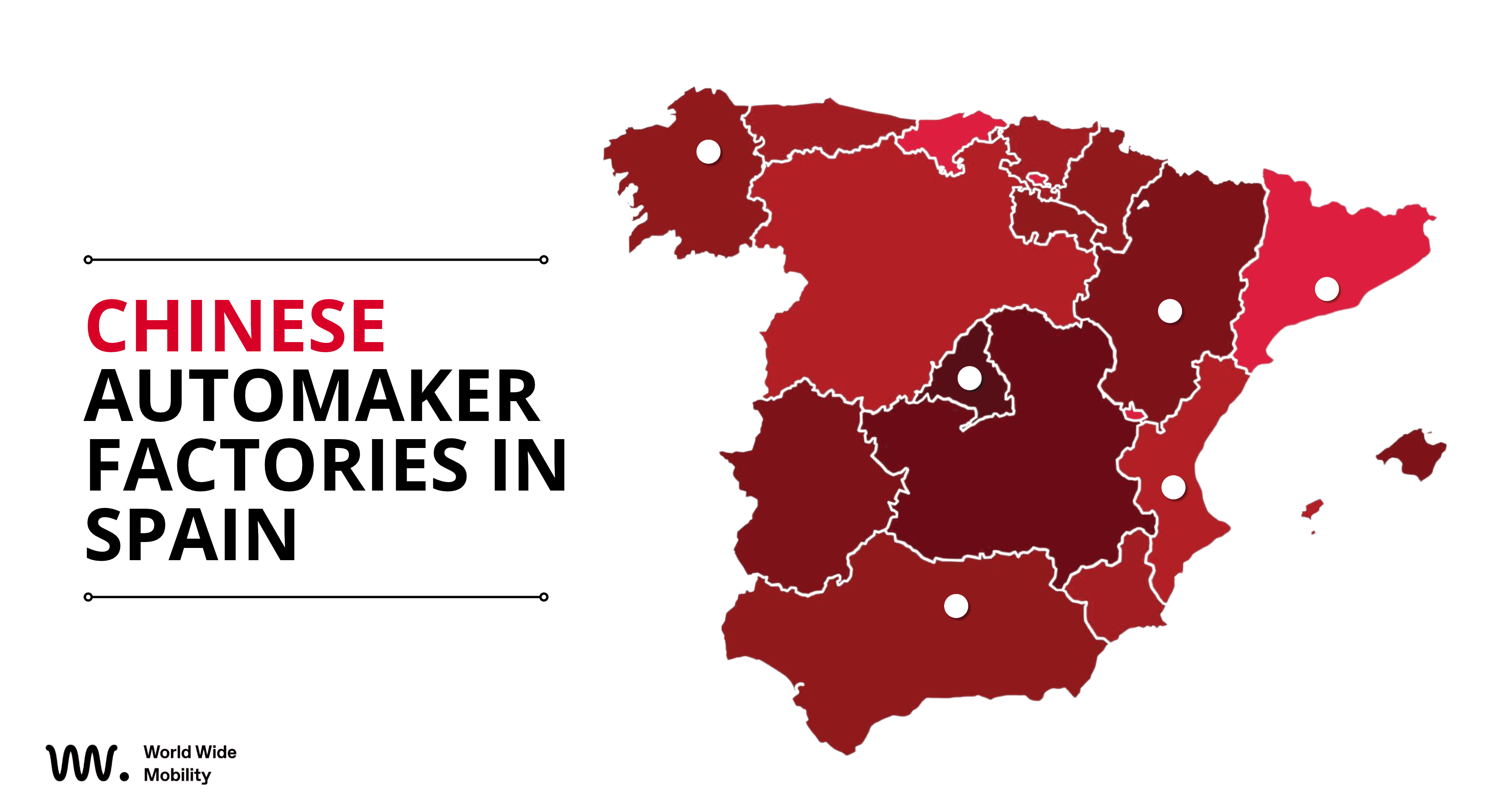
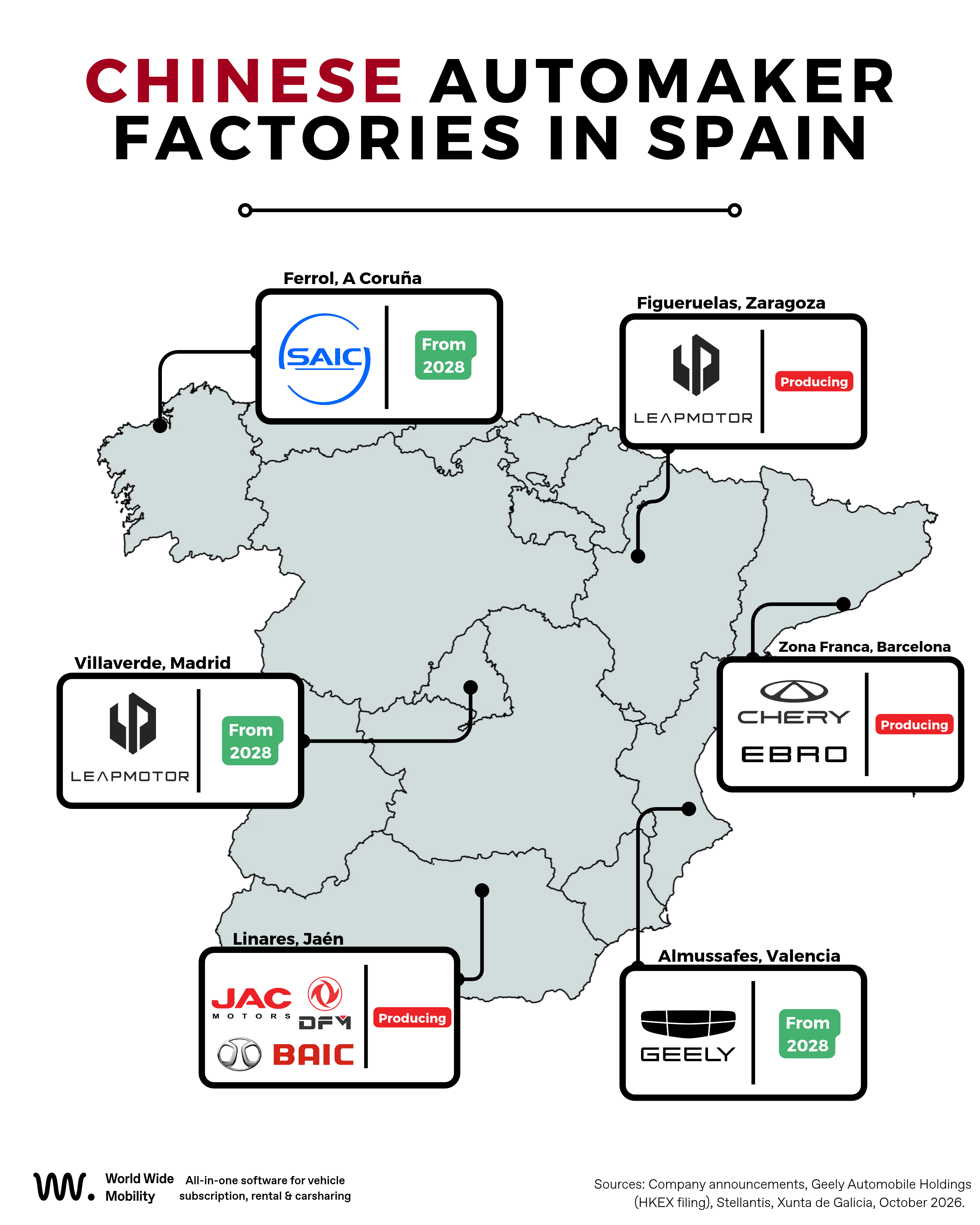
Our map tracks six locations. In three of them, vehicles from Chinese brands, or built on Chinese platforms, are already coming off the line. In the other three, production is planned from 2028. Together, they show how quickly Spain, the EU's second-largest car producer after Germany, is turning into a manufacturing base for Chinese automakers in Europe.
Three sites are already producing
The clearest milestone came on October 16, 2026, when Stellantis officially launched series production of the Leapmotor B10 at its Figueruelas plant in Zaragoza. The car is built through Leapmotor International, the joint venture owned 51% by Stellantis and 49% by Leapmotor. First deliveries are expected between December and January, and the Leapmotor B05 is due to join the line in the first half of 2027.
In Barcelona, the former Nissan plant in the Zona Franca is now run by Ebro together with Chery, which owns 40% of the business. It assembles Ebro models developed with Chery, and Chery plans to add electric versions of its own Omoda and Jaecoo models.
The third site is Linares, in Jaén, where the historic Santana factory is back in business with a different approach. Vehicles arrive from China as semi-knocked-down (SKD) kits and are finished in Spain. The line builds the Santana 400 pickup, based on a Dongfeng model, and the Santana Cajal, based on BAIC's BJ40. Since July 2026, it has also been assembling JAC's E30X, a small electric city car.
The 2028 wave
The next phase is bigger. In Almussafes (Valencia), Ford and Geely agreed in July 2026 to run Ford's plant as a joint venture, 66% owned by Ford and 34% by Geely. The venture is expected to start operating in the first half of 2027, subject to regulatory approval, and to build three Ford models and two Geely electric vehicles from 2028. The plant can produce nearly half a million vehicles a year.
In Villaverde (Madrid), Stellantis and Leapmotor plan to allocate a new Leapmotor model to the plant, possibly from the first half of 2028, as Citroën C4 production comes to an end. The partners are also studying a transfer of the plant's ownership to Leapmotor International's Spanish subsidiary.
Ferrol (A Coruña) is the exception: the only factory on the map that will be built from scratch. SAIC, the group behind MG, has chosen the city's outer port for its new European plant. Project documents published by the Xunta de Galicia point to an investment of around €196 million, stamping, body and paint shops, and capacity for up to 120,000 vehicles a year. Construction is expected to start in 2027, with production planned for late 2028.
A map of partnerships
Read closely, the map is less about Chinese-owned factories than about alliances. Outside Ferrol, Chinese car brands are moving into existing Spanish plants through joint ventures with Stellantis and Ford, a stake in Ebro or assembly agreements in Linares.
The logic is commercial as much as industrial. Building in Spain lets Chinese brands avoid the extra EU duties on electric cars imported from China and prepare for upcoming "Made in Europe" requirements. European groups, in turn, fill plants that have spare capacity. Several projects start by assembling parts shipped from China and plan to localize more processes, and more suppliers, over time.
As these brands scale, the companies that put their cars on the road need technology that can keep pace. World Wide Mobility provides modular technology for rental, subscription, car-sharing, MaaS and fleet-based services, helping mobility companies digitize and scale their operations. Explore our solutions.